


What Does a Control Arm Do? Understanding Your Car’s Suspension System
Date Posted: 22 April 2026
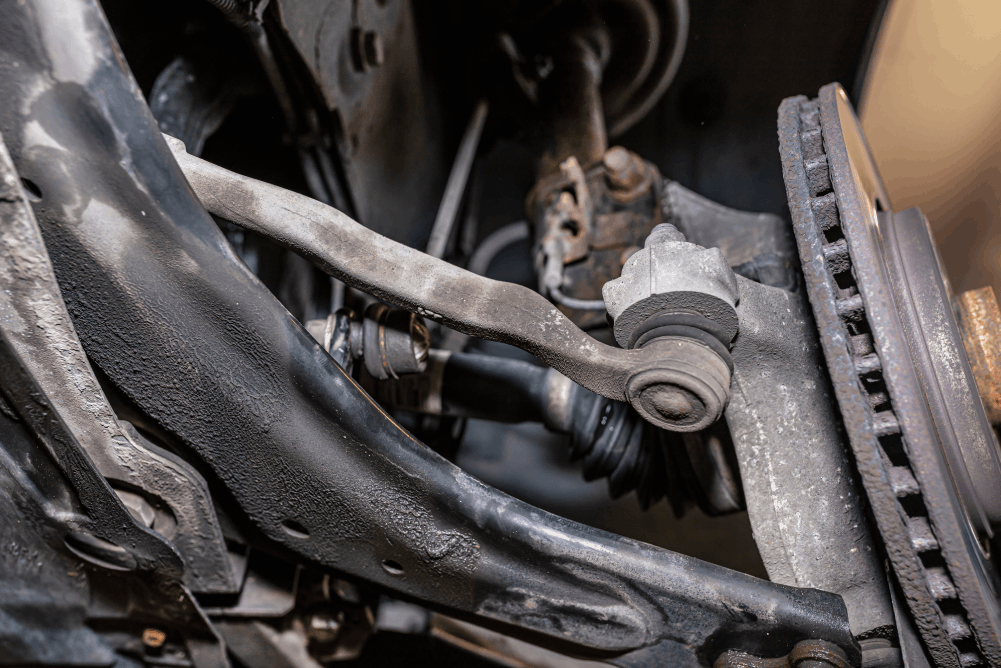

If you’ve ever peeked behind your front wheels while changing a tyre, you’ve probably noticed a heavy-duty, metal component connecting your wheel to the frame. That’s your control arm, otherwise known as a suspension control arm. But what does a control arm do? In the simplest terms, it’s the hinge that allows your wheels to articulate up and down over bumps while keeping them from moving forward or backward.
Whether you’re maintaining a daily driver or stocking a workshop, getting the right control arms and bushings can be the difference between a smooth ride and a vehicle that feels like it’s got a mind of its own. Having a good understanding of control arm parts and when they need replacing is vital for both safety and saving a packet on repair bills. Let’s get stuck into it.
What Does a Control Arm Do? — Function Explained
To understand the role of a control arm for a car, think of it as a shoulder joint. It needs to allow for a wide range of motion (the suspension going up and down) while maintaining a solid, fixed position relative to the body (the chassis).
What Does a Lower Control Arm Do?
Technically, a lower control arm acts as the critical pivot point. When you hit a speed hump or a pothole, the arm allows the suspension to compress and rebound vertically. This ensures that your tyres maintain constant contact with the road surface, helping with stability and braking performance. Without it, your wheels wouldn’t stay synchronised with the rest of your steering parts, leading to a loss of control.
What Does an Upper Control Arm Do?
An upper control arm connects to the highest point of the steering knuckle. By working together with the lower arm, it creates a more substantial assembly that ensures balanced wheel control and maximum stability. This dual-arm architecture allows the steering knuckle to pivot and the wheels to turn smoothly while the vehicle is in motion.
Keep in mind that not every vehicle has an upper control arm; if your car has a Macpherson suspension system, it will only have a lower control arm. Instead of an upper control arm, it will have a strut.
The Breakdown: Components & Types
A control arm isn't just a solid hunk of metal. It relies on two critical wear points: control arm bushings and ball joints.
What Are Control Arm Bushings?
Usually made of rubber or polyurethane, a lower control arm bush acts as a flexible pivot point that dampens road noise and vibration. Over time, these can crack or harden.
What Does a Control Arm Bushing Do?
It’s easy to get control arms and bushings mixed up since they work together, but they serve very different purposes.
The control arm itself is the sturdy metal "skeleton." Its job is structural — it holds the wheel in place and bears the vehicle's significant weight and force
On the other hand, bushings are designed to prevent metal-on-metal rubbing and absorb road shocks. While the arm is built to last a long time, the bushings are designed to take the brunt of the friction and vibration, meaning they often wear out much faster than the metal arm itself.
What is a Ball Joint?
Ball Joints: A ball joint allows the wheel to turn left and right for steering while moving up and down. On many modern cars, the ball joint is pressed into the arm, meaning you'll need a full control arm replacement rather than just replacing the joint itself.
What Does a Control Arm with a Ball Joint Do?
A control arm with ball joint provides a 360-degree pivot point at the wheel hub. This allows the wheel to move up and down with the suspension while also turning left and right for steering.
Technical Specs & Control Arm Replacement Considerations
You usually have a few options for control arm replacement: either stamped steel, cast iron, or cast aluminium. They each have their place. For example, stamped steel control arms are the cheapest — but also easiest to rust. Cast iron is much stronger and more durable, but heavy — most commonly used for trucks and large SUVs. Cast aluminium is a popular middle ground — lighter than cast iron but stronger than stamped steels. That said, cast aluminium control arms for cars are susceptible to damage when driving over potholes or on underdeveloped roads, as they are softer than cast iron.
Whatever you choose, at Machter, we ensure our parts meet or exceed OEM standards. You aren’t getting a generic part that's "close enough" — you’re getting a part that is designed to perform exactly like the original (if not better)
DIY Tip: If you’re doing the work yourself, never tighten the control arm bolts while the car is on stands. The suspension needs to be at "ride height" (wheels on the ground) before the final torque, or you’ll twist and ruin your new bushings quickly. Also, remember that a wheel alignment is mandatory after any control arm work to ensure your steering is true.
Symptoms of a Bad Control Arm
Since these parts wear out gradually, the signs can be easy to miss until they become a safety hazard. If you’re noticing any of these symptoms of a bad control arm, it’s time to see a professional.
- Clunking or Knocking: Usually heard when driving over bumps or during heavy braking. This often is a sign of a damaged lower control arm bush, allowing metal-on-metal contact.
- Unstable Steering: The vehicle pulls to one side or the steering feels "loose" and wanders in a different direction than what’s intended.
- Excessive Vibrations: If the control arm or bushings can no longer absorb road shock, you'll feel it through the steering wheel or the floorboards.
- Uneven Tyre Wear: Look for "feathering" or bald shoulders on your tread. If the arm isn't keeping the wheel aligned, your tyres will pay the price.
- Poor Suspension Performance: Check if the suspension feels less responsive or more bouncy than usual during your drive.
Our roads aren’t always kind here in Australia. Corrugated dirt tracks and heavy towing accelerate wear on steering parts. If you notice any of these symptoms of a bad control arm, get your alignment inspected immediately. The last thing you want is your vehicle going out of control on the road — risking the safety of yourself and those around you.
Why Source from Machter?
We’ve been in the game for over 10 years, supporting over 22,000 models and variations. We aren't just a shop; we are automotive specialists who manufacture and import a wide range of aftermarket parts designed to handle the tough conditions our cars face every day. From Ford Ranger control arms to control arms for Holdens and more, we’ve got you covered.
- Guaranteed Fitment: Use our "Find My Vehicle" tool to ensure you get the right part every time.
- 2 Year Local Warranty: We stand by the quality of our parts.
- Low Prices: We're the affordable alternative to overpriced dealer parts.
- Trade Support: We provide wholesale pricing for workshop owners looking to keep their margins healthy.
Ready to Fix That Ride?
Now that you know what a control arm does and when to get it fixed, there’s no excuse for letting a dodgy suspension compromise your safety. Whether you need to browse control arms for a DIY project or you're a mechanic looking to shop from our full steering range in bulk, look no further than Machter: your one-stop auto shop.


