


Control Arm vs Ball Joint: What's the Difference?
Date Posted: 17 July 2026
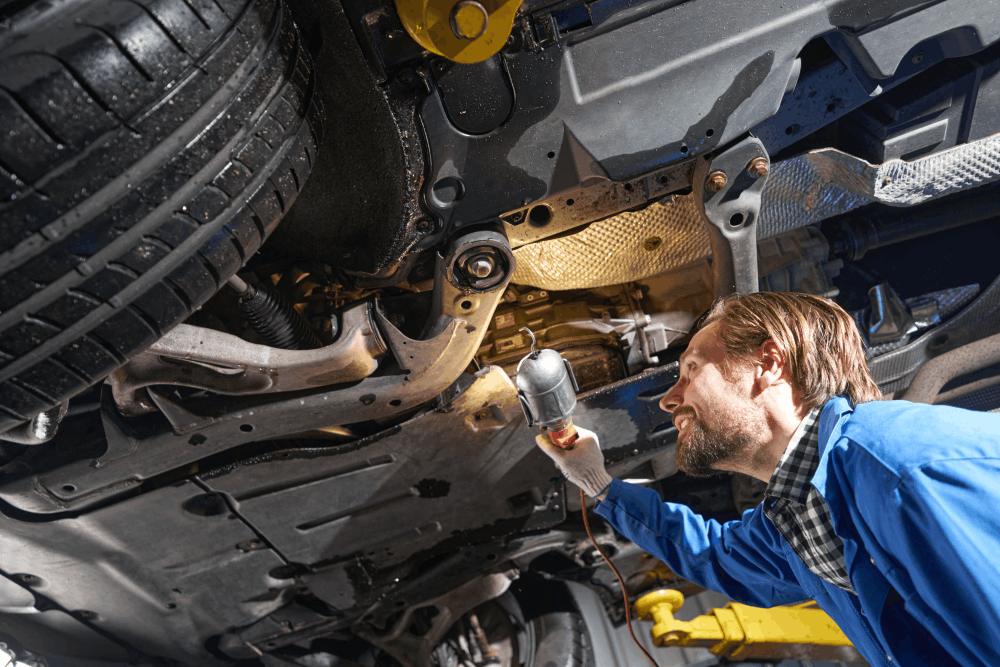

When your vehicle starts tracking crookedly across the road or making a mysterious clunking sound over speed bumps, the issue usually points directly to your front suspension. Since they are nestled right next to each other behind the front wheels, many drivers struggle to understand the key control arm and ball joint difference.
While they form a closely integrated partnership to manage your ride quality, they perform entirely separate tasks. Mistaking one for the other during a garage teardown can leave you with the exact same handling alignment issues you started with. Understanding how these critical suspension components function individually is the first step toward restoring your vehicle’s factory handling.
What Is a Control Arm?
It is a structural metal link — frequently referred to as a wishbone or A-arm — that hinges your moving wheel assembly directly to the vehicle’s stationary chassis or subframe.
Its primary job is to control the physical path of the wheel, allowing it to travel vertically up and down over potholes and road crests while preventing forward or backward movement. By anchoring the wheel assembly securely in place, the component prevents your tracking angles from changing wildly during heavy braking, acceleration, or hard cornering.
Most passenger cars feature robust lower units, while larger SUVs, 4WDs, and high-performance vehicles employ both upper and lower variations to handle greater load distribution. At the chassis side, the arm pivots on rubber or polyurethane suspension bushes, which act as dampening pads to isolate the cabin from harsh road vibrations.
What Is a Ball Joint?
A ball joint refers to the flexible pivot point that sits at the outer edge of the assembly.
Functioning like a human hip or shoulder joint, it consists of a highly polished steel ball stud enclosed inside a greased metal socket, fully shielded by a flexible rubber dust boot. This clever design allows for multi-directional articulation.
It provides the crucial connection between the control arm and the steering knuckle, allowing the front wheels to pivot smoothly left and right when you turn the steering wheel, while simultaneously flexing up and down with the suspension’s travel. Without this fluid, spherical range of motion, your front wheels wouldn’t be able to steer while absorbing road impacts at the same time.
Control Arm and Ball Joint Difference
To keep your steering responsive and your tyres flat against the tarmac, the structural control arm regulates position, while the pivoting ball joint allows for angular movement.
- Control Arm: Located between the chassis and the wheel assembly. Its main role is to maintain structural wheel alignment and guide vertical travel. Common failure zones are perished bushings or structural cracking from impact.
- Ball Joint: Located between the arm tip and the steering knuckle. Its main role is to allow multi-directional articulation and smooth steering rotation. Common failure zones are torn dust boots, lost grease, and internal socket play.
Spotting Bad Control Arm Symptoms
Your front-end components wear out gradually over thousands of kilometres, so the early warning signs can be easy to miss. If your vehicle is showing any of these classic bad control arm symptoms, your front alignment is likely compromised:
- Steering Wander: The vehicle feels loose, drifts unprompted to one side, or requires constant micro-corrections to keep straight.
- Clunking Noise: A heavy, metallic knocking sound occurs when transitioning over driveways or under hard braking. If ignored, the extra movement can quickly damage surrounding gear like your rubber bump stop kits.
- Excessive Vibration: High-frequency shuddering travels through the floorboards or steering wheel because the arm or bushings can no longer absorb basic road shock.
- Uneven Tyre Wear: Keep an eye out for "feathering" or bald shoulders on your tread — it indicates the control arm isn't keeping the wheel aligned.
- Inadequate Suspension Performance: Keep an eye out for the suspension feeling less responsive or more bouncy than normal while driving.
Recognising Bad Ball Joint Symptoms
When the internal socket of a ball joint loses its tight tolerances, it develops excessive physical looseness. Watch out for these bad ball joint symptoms:
- Clunking Noise: A faint, intermittent clicking or snapping noise starts in a corner of the vehicle. If you hear clicking but the joint is tight, it’s also worth checking your sway bar links, as they produce similar sounds when worn.
- Uneven Tyre Wear: The inner or outer shoulders of your front tread feather and bald rapidly because the wheel is leaning at an incorrect angle.
- Sloppy or Stiff Steering: The steering wheel feels unusually loose or binds up during tight parallel parking maneuvers.
- Car Wobble: If your ball joints have turned loose in their sockets, the resulting vibration can cause the car to wobble side to side, also known as a car shimmy.
Bad control arm symptoms and bad ball joint symptoms can overlap, so if in doubt, it’s worth getting a professional to identify the root of the issue.
Is It Better to Replace the Entire Assembly?
When the time comes for a suspension overhaul, you will probably find yourself tossing up between pressing out the old joint or replacing the entire arm unit. In many modern cars, the factory ball joint is permanently pressed, riveted, or integrated into the arm housing, which can make isolated replacement tricky.
If your vehicle has clocked over 100,000 kilometres, upgrading the complete control arms assembly is generally the most economical choice. A pre-assembled arm arrives ready to bolt on with fresh chassis bushes and a brand-new joint already installed. This eliminates the tedious labour of using hydraulic presses to extract old fittings and completely resets your suspension lifespan in one go.
However, if your metal arm is perfectly straight and the inner rubber bushes are still solid, replacing standalone ball joints is a highly cost-effective option for vehicles with lower mileage or serviceable bolt-on brackets.
Refresh Your Suspension Components at Machter
Leaving worn suspension items unchecked places a huge load on surrounding steering gear. A loose joint can snap completely, causing the wheel to fold outward and leading to a total loss of vehicle control.
When refreshing your front end, it’s the ideal mechanical window to inspect related damping components, such as your shock absorbers, to ensure a smooth ride. Explore Machter’s trusted collection today to find precise, durable replacement parts tailored to your vehicle.


