


Clock Spring vs Steering Angle Sensor: What’s Causing Your Steering Issues?
Date Posted: 29 May 2026
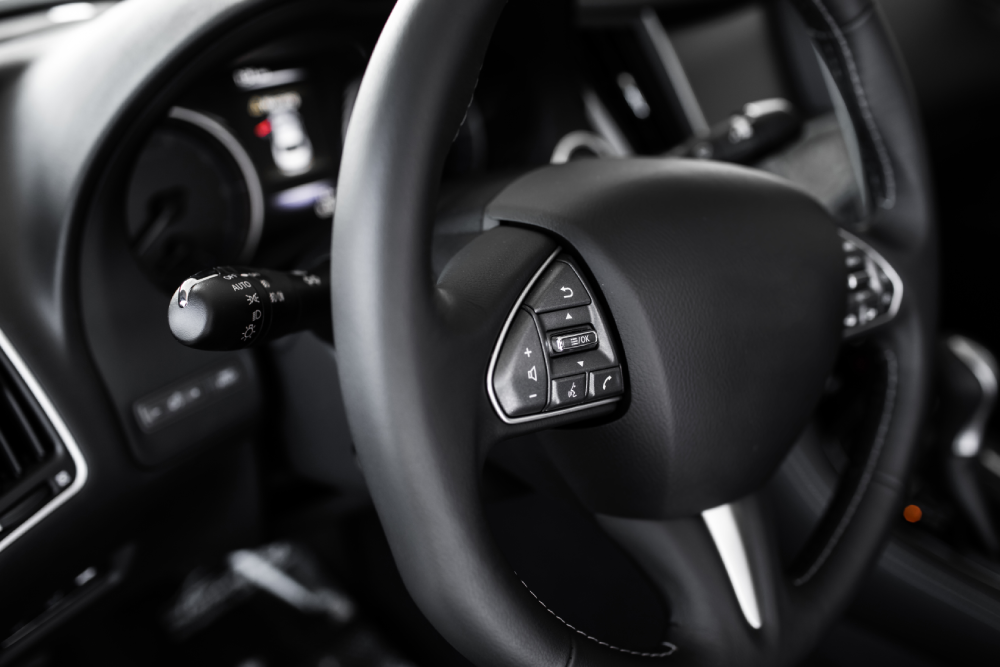

TL;DR: If your steering wheel buttons or horn have stopped working and the airbag light is on, you’re likely dealing with faulty clock spring symptoms. If your steering feels fine but your traction control or ABS lights are glowing, the steering angle sensor (SAS) is likely the culprit. Both are critical for safety, and while they live in the same neighbourhood behind your steering wheel, they perform very different roles in your vehicle's electrical health.
Understanding Different Types Of Steering Issues
When your steering starts playing up, it’s easy to assume the worst — like a dying power steering pump or a rack that has seen better days. However, modern cars are essentially rolling computers, and many steering problems are actually steering system electrical faults rather than mechanical failures.
A mechanical issue usually gives you physical feedback, like a heavy wheel, a shimmy at high speeds, or a groan when you lock the wheel over. Electrical issues, on the other hand, are often more subtle. You might notice your cruise control won't engage, your horn is silent, or your dashboard lights up like a Christmas tree. Because your steering column houses your airbag system connection, indicators, and stability controls, a fault here can disable several systems at once. If you are noticing these ‘ghost in the machine’ problems, you need to look closer at your steering components to find the root cause.
The Serious Safety Implications Of Steering System Electrical Faults
We often take for granted that when we turn the wheel, the car goes where it is pointed. But there’s a lot of safety tech working behind the scenes. If you have an electrical fault in your column, you aren't just losing the convenience of radio buttons.
The most critical concern is the SRS (Supplemental Restraint System). The clock spring provides the continuous electrical path to the driver’s airbag. If that connection is severed, your airbag won’t deploy in an accident. Similarly, your car's Electronic Stability Control (ESC) and Anti-lock Braking System (ABS) rely on knowing exactly where your wheels are pointed. If the car loses this data, it might not be able to pull you out of a skid or prevent a wheel from locking up. This is why a failing ABS sensor or a bad steering angle sensor can be so dangerous.
Is It The Clock Spring Or The Steering Angle Sensor?
This is the diagnostic question that stumps many DIYers. Both components are located in the "hub" behind your steering wheel, often stacked together. To figure out which one is causing grief, you need to look for specific faulty clock spring symptoms versus bad steering angle sensor signs.
The Clock Spring: The Physical Connection
Think of the clock spring as a spiralled ribbon cable. Its job is to stay connected while you spin the wheel left and right. Asking yourself, “How do I know if my clock spring is broken?” Bad clock spring symptoms are almost always related to "missing" electrical signals:
- Failed Horn: You press the pad and get nothing but silence.
- Airbag Warning Light: The most common sign of an issue with the airbag system connection.
- Dead Buttons: Cruise control, volume, or phone buttons stop working entirely or only work when the wheel is turned to a certain angle.
- Audible Noise: You might hear a rubbing or clicking sound inside the column when turning.
The Steering Angle Sensor: The Electronic Eye
The steering angle sensor (SAS) is an electronic device that measures the angle, position, and rate of turn of your steering wheel.
- Traction Control & ABS Lights: Because the SAS provides data to the stability systems, a failure will almost always trigger these lights.
- Steering Feel Changes: In cars with electronic power steering, a bad sensor can make the steering feel “distant” or inconsistent.
- Wheel Alignment Issues: Sometimes a sensor isn't "broken", it’s just out of calibration because of a bad wheel alignment.
What happens if a steering angle sensor fails? Your car may enter a "limp mode" where performance is restricted to prevent a safety incident.
Replacement Parts: What You Need To Know
Clock Spring Replacement
The typical lifespan of a clock spring is around 10 to 15 years, though it can fail sooner if the steering rack has been disconnected and the wheel is allowed to "free spin," overextending the internal ribbon.
- Replacement considerations: This job requires removing the steering wheel and the airbag. Safety is paramount — you must disconnect the battery and wait for the system to discharge before starting.
- Clock spring replacement cost in Australia: For the part alone, you are looking at anywhere from $100 to $400, depending on your vehicle. If you take it to a workshop, the clock spring replacement cost (including labour and sensor calibration) usually lands between $450 and $950 AUD.
Steering Angle Sensor Replacement
These sensors are generally solid-state and don't "wear out" like a mechanical ribbon cable, but they can be damaged by electrical surges or dust. Often, when you do a clock spring replacement, you have to transfer the old SAS over to the new unit or recalibrate it using a scan tool so the car knows where the centre point is.
Quick Facts: Other Causes Of Steering Issues
If the clock spring and SAS check out, here are other common culprits:
- Wheel Alignment: If your car pulls to one side, it’s usually an alignment issue, not an electrical one.
- Power Steering Pump: A high-pitched whine when turning usually indicates low fluid or a dying pump.
- Tie Rod Ends: A ‘clunk’ when turning or hitting bumps is a classic sign of worn mechanical joints.
- Faulty ABS Sensor: If your ABS light is on but your steering buttons work fine, check the sensors at the wheels first.
Solve Your Steering Problems With Machter
Finding the right parts for a complex steering repair shouldn't be a struggle. At Machter, we specialise in providing high-quality replacement parts as an affordable alternative to overpriced dealer components. Whether you are a DIY enthusiast looking to save on a clock spring replacement or a workshop owner needing reliable wholesale stock, we’ve got you covered. With a massive range supporting over 22,000 models, a 2-year local warranty, and our lowest price guarantee, we make sure you can fix your car with confidence. Remember to use our ‘find my vehicle’ function to check the fitment for your specific model before you buy.
Frequently Asked Questions
What happens when a clock spring fails?
When this component gives up the ghost, it essentially cuts off the communication line between your steering wheel and the rest of the car. You’ll likely see the airbag (SRS) warning light stay on, your horn will go silent, and your steering wheel buttons — like cruise control and audio — will stop responding. In some cases, you might even hear a faint clicking or scraping sound as you turn the wheel, which is the internal ribbon cable physically snapping or bunching up.
Can a clock spring cause ABS light?
In most cases, no. The clock spring handles the airbag, horn, and buttons. However, on some vehicles where the steering angle sensor is integrated into the clock spring housing, a failure in that unit can trigger the ABS and traction control lights.
Will a bad steering angle sensor affect driving?
Yes. It can cause unpredictable braking intervention from the stability control system or cause your steering to feel heavier than usual.
Can I drive with a faulty clock spring?
We don’t recommend it. While the car will physically drive, your airbag is likely disabled. This makes the vehicle unsafe and potentially unroadworthy in most Australian states.
Why is my airbag light on after a repair?
If you have recently worked on the steering or suspension, you may have accidentally damaged the airbag system connection or failed to reset the computer. Always use a scan tool to clear codes after a clock spring replacement.
Before you grab your tools, make sure to use our "find my vehicle" function on the Machter website to check the fitment for your specific model.


